Route survey
Measure cleanable area, tightest access, turning points, slopes, lifts, fill locations and disposal travel. Note where pedestrians or production constrain the cleaning window.
Care & support
A service plan is more useful when it connects the floor route, operator checks, consumable wear and evidence needed for the next maintenance decision. Record those inputs before a trial, then keep the same record during handover.
Build the brief
Four linked records
These records do not replace a current Numatic manual or a qualified service assessment. They make the facility context visible so model-specific documents and checks can be used properly.
Measure cleanable area, tightest access, turning points, slopes, lifts, fill locations and disposal travel. Note where pedestrians or production constrain the cleaning window.
Fix the floor section, soil, pad or brush, solution, pass pattern and travel speed. Inspect pickup at joints, edges and turns rather than reporting only a broad impression.
Assign pre-use inspection, tank rinse, squeegee inspection, battery or cable checks, storage and defect reporting to named facility roles without inventing service intervals.
Log hours, symptoms, consumable condition, cleaning results and any model identifier. Escalate unusual noise, leakage, electrical concerns or reduced recovery to the appropriate service route.
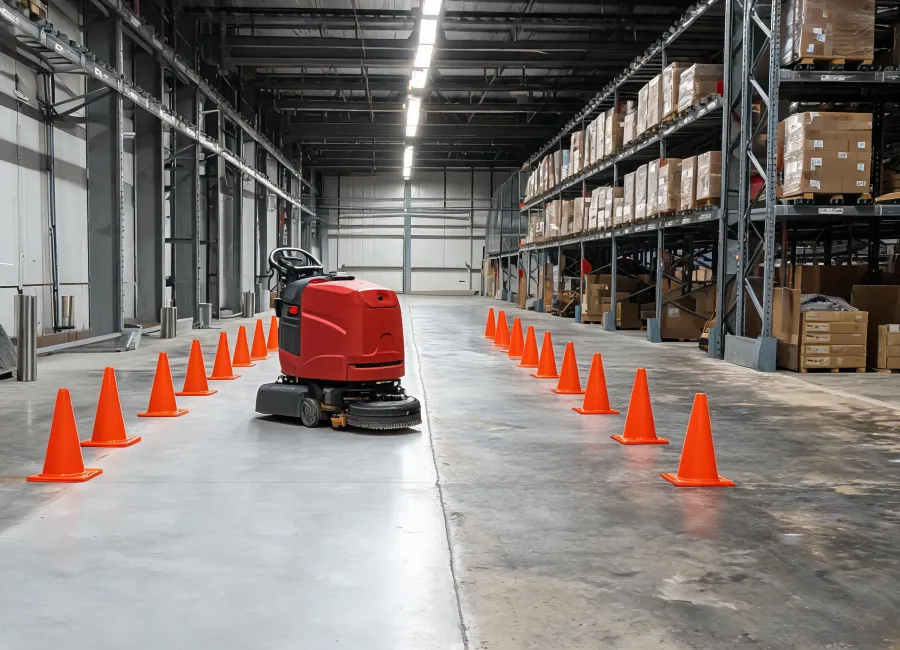
Scenario A · Warehouse route
A larger working width may reduce straight-line passes, while a compact machine may turn more easily around rack ends and door thresholds. The useful comparison keeps the same marked area and soil condition, then records setup time, active cleaning, refill or dump travel, edge work and final recovery. The result belongs to that route; it is not a universal productivity claim.
Include the narrowest access width, the number of turns and the distance to the nearest fill and disposal point. These details often explain why theoretical coverage and productive shift output differ.
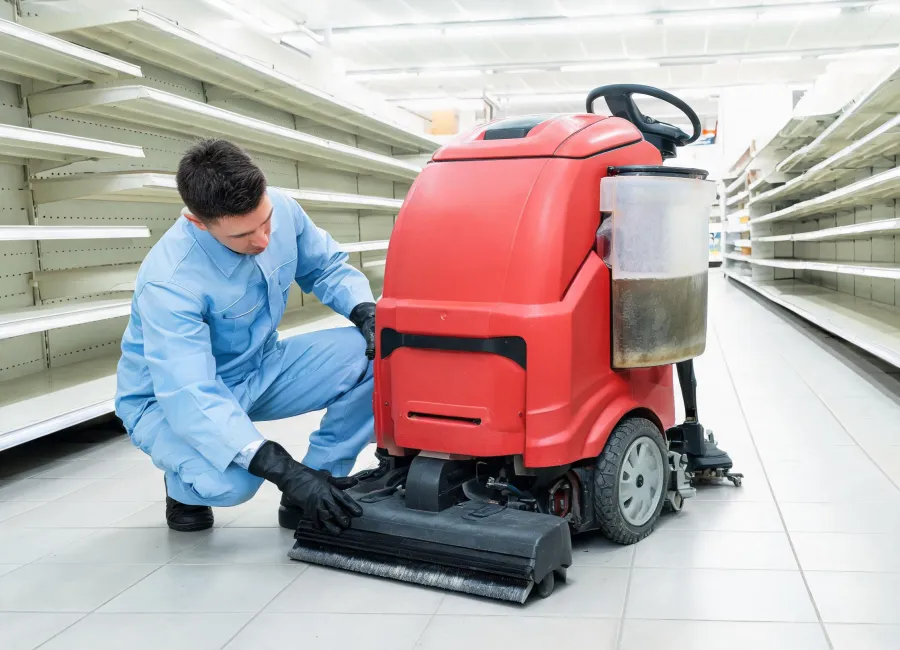
Scenario B · Finished retail floor
Higher brush pressure or a more aggressive pad can address some soils but may be unsuitable for a sensitive surface or coating. Begin with the floor-care guidance available for the site, identify the current finish, and use a discreet controlled area. Keep chemical dilution, pad, speed and dwell time in the record.
Inspect appearance, pickup and any residue after the surface has dried. Stop the test if the finish response is uncertain, and obtain the appropriate technical confirmation before expanding the method.
A practical next step
Provide the machine identifier if known, plus route area, floor, soil, access and shift. Confirm all operating limits, accessories, consumables and maintenance requirements against current model-specific documentation.